Product Liability Marketing Built for Criteria-Based Screening
Strategy, creative, and channel execution, built to reduce low-viability volume and measure performance to qualified consults and retained outcomes.
Informational only. Marketing outcomes vary by market, budget, intake, and seasonality and are not guaranteed. Veritas Ascent is not a law firm and does not provide legal services. Prior results do not guarantee a similar outcome.
What We Fix First in Product Liability Marketing
Product liability funnels fail when campaigns attract mixed-intent "injury" traffic, intake doesn't capture defect and proof signals consistently, and performance is judged by lead volume instead of retained outcomes, so performance marketing systems must be criteria-aware. We start with case-fit definition, intent segmentation (defect types / product categories), and screening workflows that protect attorney time, especially where mass tort programs overlap.
What Makes Product Liability Marketing Hard to Scale Profitably
Viability depends on proof, causation, and product context, often before a consult is worth scheduling. Without early filtering, screening costs spike and retained outcomes don't improve. Scaling works when your funnel segments intent, sets expectations, captures proof signals consistently, and closes the loop to outcomes so you invest behind what retains.
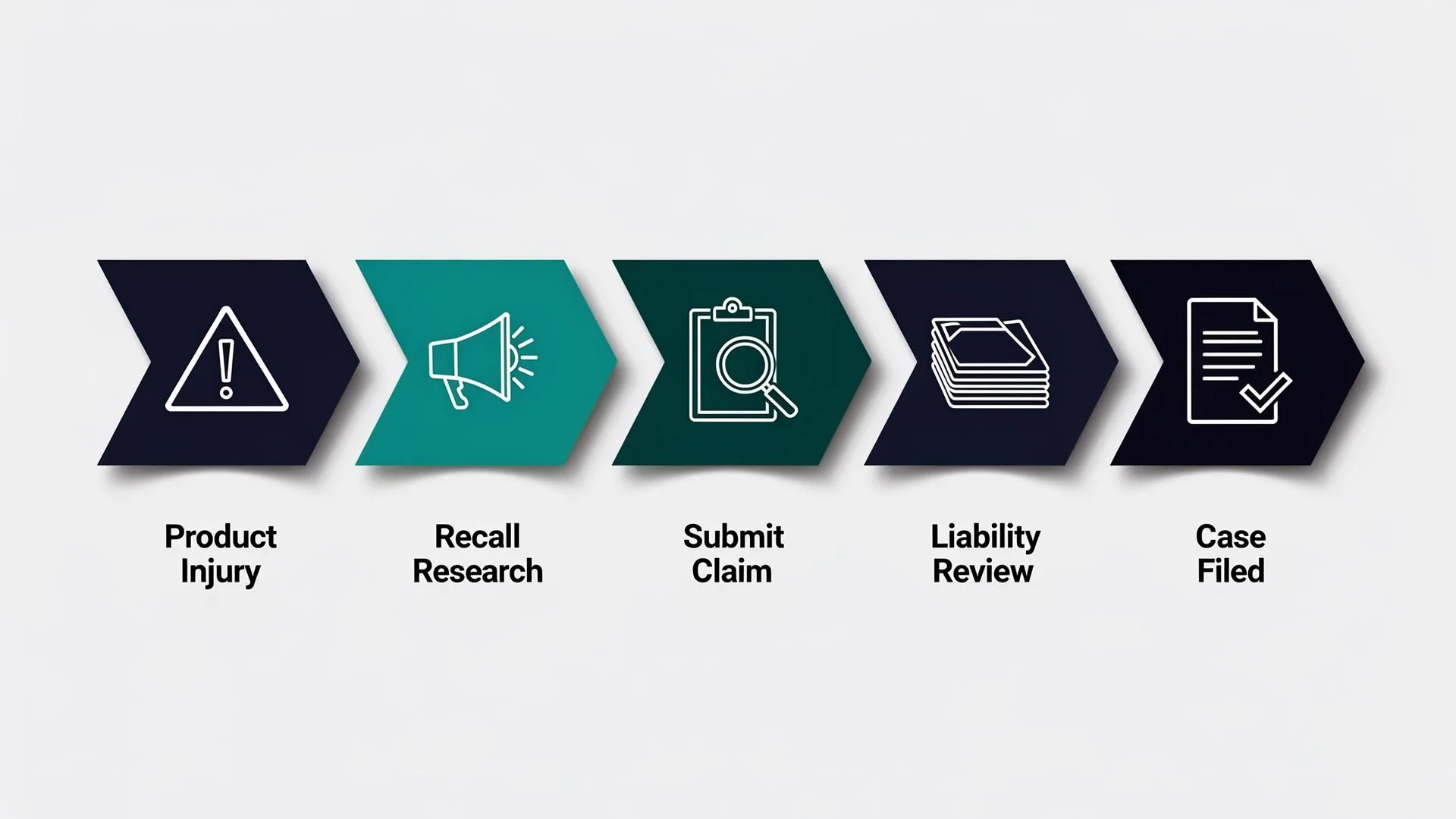
Product Liability Category Reality (Built for Real Constraints)
If your system can't perform under these constraints, spend becomes intake noise.
Viability Requires Proof Signals
Product ID, incident context, and documentation quality often determine whether the case can move.
Defect Types Convert Differently
Design defect, manufacturing defect, and failure-to-warn intent behave differently and needs clearer routing.
Case Economics Are Selective
The wrong inquiry mix burns time; screening must protect attorney hours and expert spend.
Messaging Must Set Expectations
Clear framing reduces advice-only calls and preserves trust with viable inquiries.
Intake Must Capture Triage-Grade Detail
Product, timeline, injury, usage context, and documentation must be captured consistently.
Outcomes Must Drive Optimization
Optimize to qualified consult quality and retained outcomes, not just lead volume.
Where Product Liability Funnels Break First
Broad "Injury" Targeting Buys the Wrong Mix
Intake gets flooded; consult quality and retained outcomes don't rise.
Landing Pages Don't Pre-Qualify Proof
Visitors can't self-select; intake must do all sorting under pressure.
Intake Doesn't Capture Proof Signals
Product identifiers and documentation context aren't captured consistently, so marketing can't learn.
No Fit Gate Before Scheduling
Calendars fill with low-fit calls while viable cases wait.
Reporting Stops at Leads
Optimization steers toward volume, not retained outcomes.
No Feedback Loop Back to Spend
Without outcome data, the same low-viability patterns repeat.
How Veritas Ascent Builds the Product Liability Growth System
Case-Fit Definition + Intent Segmentation
Define target product categories and viability signals, then route traffic accordingly.
Messaging Architecture + Expectation Setting
Build clarity so viable prospects self-select earlier and intake load stays controlled.
Channel Execution (PPC/LSAs/SEO/CRO)
Reduce waste, align landing paths to defect intent, and improve consult quality.
Intake Enablement + Proof Capture
Standardize scripts to capture proof signals consistently and protect attorney time.
Closed-Loop Measurement
Connect sources and messaging to consult quality and retained outcomes.
How We Support Product Liability Acquisition
Keep Your Agency, Tighten Criteria
We align campaigns to defect categories and proof signals so inquiry volume doesn't mask non-viable cases.
Defect + Proof Screening
Intake capture built around product, defect theory, injury, and documentation readiness, so attorney time is protected.
Full-Funnel Execution
Paid + content + landing paths + tracking + intake workflow tuned for higher-fit product liability matters.
What We Review First for Product Liability Growth
Our initial audit snapshot shows where your funnel is creating screening load, and where viable cases are being lost to intent mismatch, proof-capture gaps, or tracking blind spots.
You'll get a concise fix-first plan tied to qualified consult quality and retained outcomes, without implying deep access or exhaustive deliverables.
Product Liability Marketing FAQs
What You'll Get from the Initial Audit
A criteria-aware evaluation of intent segmentation, proof capture, and screening workflows for high-friction matters.